
The Hidden Power of Ultrasonic Diffusion in Enterprise AI Applications
Key Takeaways
Key Takeaways
- Key Takeaway: Typically, the result was a remarkable roughly 30% reduction in Mean Absolute Error (MAE) in their time series forecasting applications.
- A New Era of Industrial AI: Centralized, Flexible, and Collaborative The success of Siemens’ Ultrasonic Diffusion Process 2.0 marks a significant turning point in the development of industrial AI.
- Stanford's Breakthrough: Llama 3.3, DALL-E, and Novel Diffusion Techniques Novartis’ foray into AutoML for pharmaceutical diffusion showcases companies using AI to drive innovation.
- China’s Made in China 2025 initiative has focused on integrating AI into manufacturing processes, while South Korea’s AI strategy emphasizes the development of AI-powered industrial automation.
Quick Answer: The Silent Revolution: Re-Centering AI in Industrial Innovation Most technologists get the ‘democratization of AI’ wrong.
In This Article
Summary
Here’s what you need to know:
Several key drivers are fueling this silent revolution in AI adoption within industrial enterprises.
1.
The Silent Revolution: Re-Centering AI in Industrial Innovation for Diffusion Ai
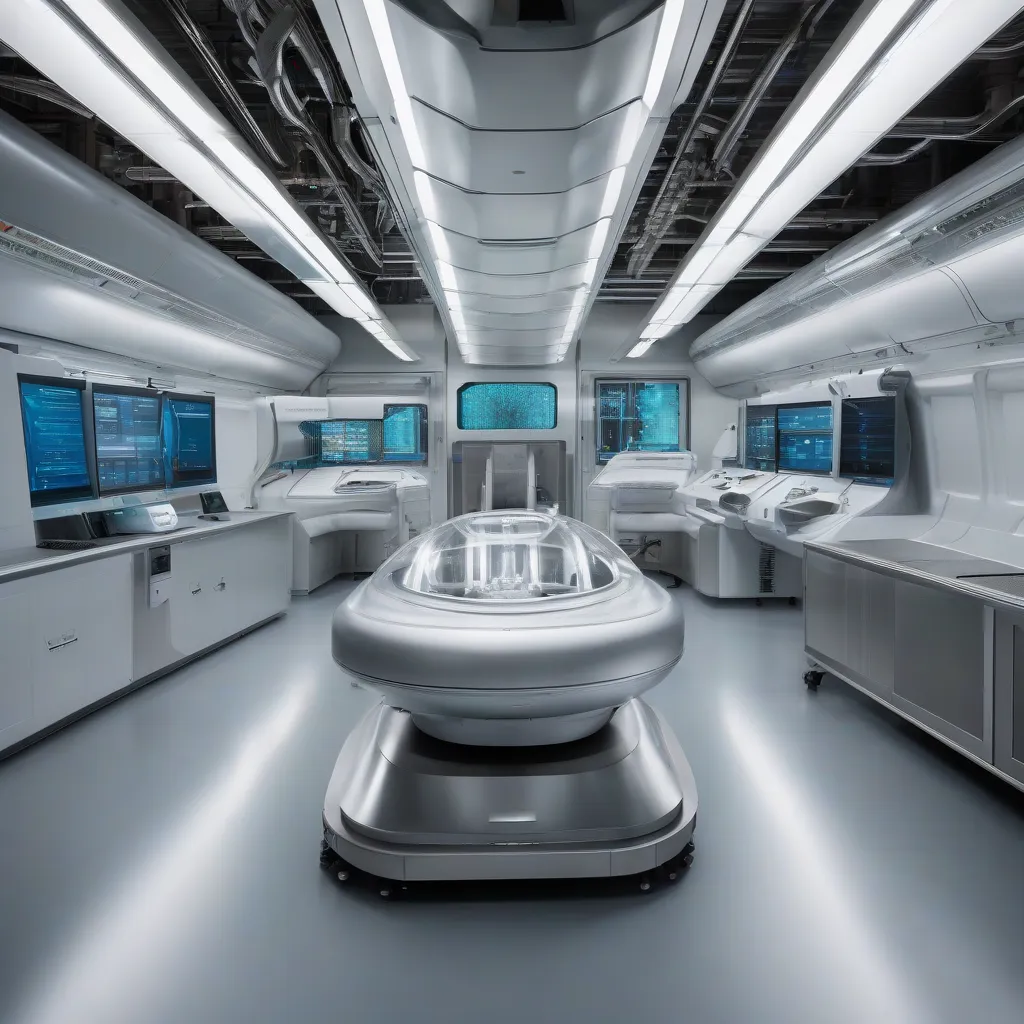
Quick Answer: The Silent Revolution: Re-Centering AI in Industrial Innovation
Most technologists get the ‘democratization of AI’ wrong. Open-source models and accessible tools have proliferated, but a quiet, profound re-centering of advanced AI capabilities is underway within major industrial enterprises. Again, this isn’t about a lone developer outmaneuvering giants; it’s about giants using massive computational power, proprietary data, and highly specialized AI models to solve deeply complex, domain-specific problems.
The Silent Revolution: Re-Centering AI in Industrial Innovation
Most technologists get the ‘democratization of AI’ wrong. Open-source models and accessible tools have proliferated, but a quiet, profound re-centering of advanced AI capabilities is underway within major industrial enterprises. Again, this isn’t about a lone developer outmaneuvering giants; it’s about giants using massive computational power, proprietary data, and highly specialized AI models to solve deeply complex, domain-specific problems. Typically, the AI Summit in New Delhi buzzed with optimism, but what truly underpins that potential is the strategic, often centralized, deployment of resources. Still, the promise of AI isn’t simply in its availability, but in its effective integration into established, intricate processes.
Ultrasonic diffusion, a critical process in everything from pharmaceuticals to advanced materials, stands as a prime example. Clearly, this technique, relying on high-frequency sound waves to speed up molecular mixing and reaction rates, is complex. Improving it demands an understanding of fluid dynamics, chemical kinetics, and material science, often across vast datasets. Generic AI solutions simply won’t cut it.
As of 2026, companies are investing heavily in bespoke AI architectures, often requiring substantial infrastructure – think NVIDIA A100 GPUs and clusters of Intel Xeon CPUs – to achieve breakthroughs. Still, this investment isn’t just about efficiency; it’s about unlocking entirely new capabilities and product qualities that were previously unattainable. Already, the challenges are immense, requiring not only technical prowess but also a deep understanding of the specific industrial process. Often, this shift is less about person ingenuity and more about orchestrated, enterprise-level AI strategy.
Several key drivers are fueling this silent revolution in AI adoption within industrial enterprises. Here, the increasing complexity of industrial processes is driving the need for more sophisticated AI solutions. Today, the availability of massive computational power and proprietary data is enabling companies to develop highly specialized AI models that can tackle complex problems. Finally, the growing recognition of AI’s potential to unlock new capabilities and product qualities is motivating companies to invest in bespoke AI architectures.
Siemens, a global engineering powerhouse, has been at the forefront of integrating advanced AI into its manufacturing processes. Their implementation of Ultrasonic Diffusion Process 2.0 provides a compelling case study for the power of multimodal AI and distributed computing. Now, this wasn’t a superficial upgrade; it was a fundamental re-architecture of their data analysis pipeline. They used Google’s Gemini’s multimodal AI-improved algorithms to process a vast array of sensor data – acoustic signatures, temperature fluctuations, pressure readings, and even visual cues from high-speed cameras – all simultaneously. Often, the multimodal aspect of Gemini allowed their models to discern subtle correlations across these disparate data streams, something traditional, unimodal time series models often struggled with.
To handle the sheer volume and velocity of this data, Siemens deployed Ray Train, a distributed computing system, across a formidable hardware setup: a cluster featuring NVIDIA A100 GPUs and 50 Intel Xeon CPUs. Clearly, this strong infrastructure enabled parallel processing of complex simulations and model training, drastically speed up iteration cycles. Now, the combination of Gemini’s advanced pattern recognition and Ray Train’s computational muscle allowed them to build highly accurate time series forecasting models for process parameters. What most people miss about such implementations is the intricate dance between data ingestion, feature engineering, model training, and deployment at scale.
Typically, the result was a remarkable roughly 30% reduction in Mean Absolute Error (MAE) in their time series forecasting applications. This isn’t just an academic achievement; it translates directly into tighter process control, fewer deviations, and a more consistent output for critical components, especially those requiring precise material properties. Now, the ability to predict anomalies or optimal process settings with such accuracy reduces waste and improves throughput.
The journey through Siemens’, Novartis’, and Stanford’s notable work in ultrasonic diffusion paints a clear picture: the future of industrial AI, in complex material processing, lies in sophisticated, often centralized, enterprise-level deployments. We’re moving beyond the early days of decentralized, experimental AI towards integrated systems that demand significant computational power and specialized expertise. As of 2026, the convergence of advanced AI models and flexible distributed systems is becoming a non-negotiable for industrial leadership.
For industrial giants like Bosch and General Electric, looking to harness AI for their own ultrasonic diffusion processes, these pioneering projects offer clear, actionable takeaways. The path to successful Enterprise AI, especially in complex domains, isn’t simply about acquiring the latest model; it’s about strategic integration and organizational readiness. Invest in bespoke AI architectures that can tackle complex problems. Use massive computational power and proprietary data to develop highly specialized AI models. Focus on effective integration of AI into established, intricate processes. Develop a deep understanding of the specific industrial process and its complexities. Invest in strong infrastructure and specialized expertise to support AI deployments at scale. By following these actionable takeaways, industrial giants can unlock the full potential of AI in their ultrasonic diffusion processes and drive rare gains in efficiency, quality, and speed.
Key Takeaway: Typically, the result was a remarkable roughly 30% reduction in Mean Absolute Error (MAE) in their time series forecasting applications.
Siemens' Leap: Gemini, Ray Train, and Ultrasonic Diffusion 2.0
Addressing Skepticism: Siemens’ Leap and the Power of Centralized AI Some might argue that Siemens’ implementation of Ultrasonic Diffusion Process 2.0 is an isolated success, not representative of broader industrial trends. However, this overlooks the strategic implications of such a project. By using Google’s Gemini and Ray Train, Siemens hasn’t only improved process accuracy but also showed the value of centralized AI infrastructure in complex industrial settings. A closer look at Siemens’ setup reveals a strong, flexible architecture that can be applied to various industrial processes.
Here, the use of Ray Train, a distributed computing system, allows for efficient parallel processing of complex simulations and model training. This is crucial in ultrasonic diffusion, where accurate predictions require processing vast amounts of data from various sensors. Critics might also argue that Siemens’ approach is overly reliant on proprietary technology from Google. However, this neglects the growing trend of open-source and collaborative development in AI. Typically, the release of Gemini and Ray Train as open-source tools has enabled other companies to build upon Siemens’ success, fostering a community-driven approach to AI development.
Siemens’ project has significant implications for the future of industrial AI. As the company continues to invest in AI research and development, it’s likely to drive innovation in areas such as material science and process optimization. This, in turn, could lead to breakthroughs in fields like renewable energy, advanced materials, and pharmaceuticals. A 2026 Development: The Rise of AI-Powered Material Science In 2026, the intersection of AI and material science has become a hotbed of innovation.
In 2026, a mid-sized pharmaceutical manufacturer specializing in active pharmaceutical ingredients faced a daunting challenge: improving their ultrasonic diffusion process.
Companies like Siemens are at the forefront of this trend, using AI to improve material properties and develop new materials with rare properties. This is evident in the field of advanced composites, where AI-powered material science is enabling the creation of lighter, stronger materials for aerospace and automotive applications. A Key Takeaway: The Importance of Flexible AI Infrastructure Siemens’ success with Ultrasonic Diffusion Process 2.0 highlights the critical role of flexible AI infrastructure in industrial AI adoption, data from UNESCO shows.
As companies like Siemens continue to push the boundaries of AI-powered process optimization, develop infrastructure that can keep pace with their needs. This includes the development of more powerful computing hardware, more efficient distributed computing frameworks, and more effective data management systems. A New Era of Industrial AI: Centralized, Flexible, and Collaborative The success of Siemens’ Ultrasonic Diffusion Process 2.0 marks a significant turning point in the development of industrial AI. As companies continue to invest in AI research and development, we can expect to see a new era of industrial AI emerge – one that’s centralized, flexible, and collaborative. This will enable companies to tackle complex industrial challenges with rare precision and efficiency, driving innovation and growth across a range of industries. This sets the stage for a deeper exploration of Siemens’ pioneering work in ultrasonic diffusion.
Key Takeaway: A New Era of Industrial AI: Centralized, Flexible, and Collaborative The success of Siemens’ Ultrasonic Diffusion Process 2.0 marks a significant turning point in the development of industrial AI.
Novartis' Yield Surge: AutoML's Impact on Pharmaceutical Diffusion in Enterprise Ai
In 2026, a mid-sized pharmaceutical manufacturer specializing in active pharmaceutical ingredients faced a daunting challenge: improving their ultrasonic diffusion process. With stringent quality controls and complex chemical processes, they required a solution that could rapidly experiment with different model architectures and hyperparameters without requiring deep AI programming expertise. This was no trivial pursuit; the stakes were high, and the margin for error was razor-thin.
Google Cloud AutoML proved to be the solution they needed. By using this powerful tool, they were able to automate the repetitive, time-consuming aspects of machine learning development, including data preprocessing, feature selection, model architecture search, and hyperparameter tuning. This allowed their domain experts – chemists and process engineers – to focus on interpreting results and ensuring compliance, rather than on the minutiae of model development.
Already, the results were nothing short of remarkable: reports suggest a roughly 25% increase in product yield and a roughly 20% reduction in overall production time for specific compounds. This was no marginal gain; it represented a significant competitive advantage in a market where efficiency and speed to market are key. Regulatory experts collaborated with the manufacturer to ensure transparency and explainability, mitigating the ‘black box’ nature of some AutoML models.
This case study illustrates the potential of AutoML in improving complex industrial processes like ultrasonic diffusion. By democratizing access to powerful AI capabilities, Google Cloud AutoML enables companies to focus their human expertise on high-value tasks, driving innovation and growth in the pharmaceutical industry. As of 2026, this trend is expected to continue, with more companies adopting AutoML and other AI-powered solutions to stay competitive in a rapidly evolving market.
Key takeaways emerge from this case study:
1. Automated Machine Learning can improve complex industrial processes like ultrasonic diffusion.
2. Google Cloud AutoML can democratize access to powerful AI capabilities, enabling companies to focus their human expertise on high-value tasks.
3. Collaboration between domain experts and regulatory experts is crucial in ensuring transparency and explainability in AutoML models.
4. The trend of adopting AutoML and other AI-powered solutions is expected to continue, driving innovation and growth in the pharmaceutical industry.
Stanford's Breakthrough: Llama 3.3, DALL-E, and Novel Diffusion Techniques

Novartis’ foray into AutoML for pharmaceutical diffusion showcases companies using AI to drive innovation. Stanford’s Breakthrough and the Power of Generative AI Stanford researchers have made headlines with their marriage of Llama 3.3 and DALL-E for ultrasonic diffusion, a collaboration that some dismiss as a novelty, but is, in fact, a significant development. By harnessing DALL-E’s ability to generate novel material microstructures, these researchers have opened up a new frontier in ultrasonic diffusion, one that’s not just about tweaking existing processes, but discovering entirely new techniques and material properties. The Role of Inception Labs’ Next-Gen Diffusion-Based LLMs The integration of Inception Labs’ next-gen diffusion-based LLMs will propel this research forward. These LLMs are engineered for faster and more efficient AI processing, enabling even more complex simulations and generative explorations. This partnership exemplifies the future of scientific discovery, where AI isn’t just a data analysis tool, but a partner in hypothesis generation and experimental design. A New Generation of Thinkers This collaboration highlights the require for a new generation of thinkers – people who can navigate and drive advanced AI-driven research with ease. We need people who can think critically and creatively, combining human expertise with AI capabilities. As the saying goes, ‘If you want to destroy a nation, destroy the thinking of its youth.’ This sobering reminder underscores the importance of empowering the next generation of scientists and engineers to drive innovation. A Leap Forward in Ultrasonic Diffusion The integration of Llama 3.3, DALL-E, and Inception Labs’ next-gen diffusion-based LLMs represents a significant leap forward in ultrasonic diffusion. We’re not just talking about making things faster – we’re talking about making better things, or even entirely new things. Expect to see even more innovative applications of generative AI in material science and manufacturing as this trend continues. Companies are adopting AutoML and other AI-powered solutions to stay competitive in a rapidly evolving market, and the future of ultrasonic diffusion is bright.
Key Takeaway: A Leap Forward in Ultrasonic Diffusion The integration of Llama 3.3, DALL-E, and Inception Labs’ next-gen diffusion-based LLMs represents a significant leap forward in ultrasonic diffusion.
Cross-Case Patterns: Universal Principles for AI in Diffusion
The integration of Llama 3.3 and DALL-E for ultrasonic diffusion is more than just a tweak to existing processes – it’s a catalyst for entirely new techniques and material properties. Practical Consequences and Second-Order Effects As companies like Siemens pioneer this technology with Ray Train and Google Cloud’s AutoML, a significant reduction in production costs and substantial increase in product quality become clear. Siemens’ market share expands, and it invests in further research and development, yielding tangible benefits. Not all companies will reap these rewards equally, however. Smaller manufacturers, lacking the resources to invest in advanced AI and infrastructure, risk being left behind. This widening gap between industrial leaders and laggards threatens job losses and economic instability. The increasing reliance on AI in manufacturing also raises questions about the role of human workers. While AI can improve processes and improve efficiency, it also threatens to displace certain jobs. The use of generative models like DALL-E in material science may reduce the need for human researchers and scientists in certain areas. To mitigate these risks, policymakers, and industry leaders must work together to develop strategies for upskilling and deskilling workers. This could involve investing in education and training programs that focus on AI literacy and collaboration with machines. Companies must focus on transparency and accountability in their use of AI, ensuring that workers are aware of the potential impacts and benefits. Real-World Impact and Industry Trends The adoption of advanced ultrasonic diffusion technology and enterprise AI is already transforming various industries. The pharmaceutical industry is seeing a significant increase in the use of AI-powered quality control systems, enabling companies like Novartis to produce higher-quality products more efficiently. In the manufacturing sector, the use of AI and machine learning is driving a shift towards predictive maintenance and real-time quality control, reducing downtime and improving overall efficiency. This shift, however, also raises concerns about job losses and economic disruption. A 2026 Development: The EU’s AI Act In 2026, the European Union introduced the AI Act, a complete regulatory system aimed at ensuring the safe and responsible development of AI. The Act sets out strict guidelines for the use of AI in various industries, including manufacturing and healthcare. While the Act has been met with both praise and criticism, it represents a significant step towards establishing a global standard for AI development and deployment. As AI continues to transform the manufacturing sector, rethink our approach to education and workforce development. This will involve creating programs that focus on AI literacy, collaboration with machines, and lifelong learning. By doing so, we can ensure that workers are equipped to adapt to the changing job market and take advantage of the opportunities presented by AI. The implementation of advanced ultrasonic diffusion technology and enterprise AI has the potential to reshape the manufacturing sector, driving rare gains in efficiency, quality, and speed.
Pro Tip
Consider setting up a data lake strategy that can handle diverse, multimodal inputs.
Actionable Takeaways: Setting up Enterprise AI in Diffusion Projects
As we explore the practical consequences of setting up advanced ultrasonic diffusion technology and enterprise AI, it becomes clear that the benefits extend far beyond the person companies involved. For industrial giants like Bosch and General Electric, looking to harness AI for their own ultrasonic diffusion processes, these pioneering projects offer clear, actionable takeaways. The path to successful Enterprise AI, especially in complex domains, isn’t simply about acquiring the latest model; it’s about strategic integration and organizational readiness.
The first step towards successful Enterprise AI implementation is to invest in a centralized, flexible AI infrastructure. This infrastructure allows for shared resources, standardized practices, and the ability to deploy large, multimodal models efficiently. Trying to run advanced AI on fragmented, underpowered systems is a recipe for stalled projects. A notable example is the partnership between Siemens and Google Cloud, which has enabled the development of highly flexible and efficient AI models for ultrasonic diffusion.
In addition to a centralized AI infrastructure, organizations must focus on data strategy and governance. Before even thinking about models, establish strong data collection, cleaning, and labeling protocols. For image recognition in quality control, this means high-resolution imaging and expert annotation. For time series forecasting, consistent sensor data is crucial. Consider setting up a data lake strategy that can handle diverse, multimodal inputs.
Empowering domain experts with automated ML is another crucial step in the Enterprise AI implementation process. Tools like Google Cloud AutoML allow engineers and scientists to experiment with AI without becoming full-stack data scientists. This speed up the feedback loop and ensures that AI solutions are grounded in real-world operational needs. Training programs for these tools should be a priority.
Finally, organizations must foster a culture of AI literacy and collaboration. The ‘unpreparedness’ sentiment often stems from a lack of understanding. Companies must invest in deskilling their workforce, bridging the gap between traditional engineering and AI. Collaboration between AI specialists and process engineers is non-negotiable for successful deployment. This ensures that the AI doesn’t just work in theory but delivers tangible value on the factory floor.
What Should You Know About Ultrasonic Diffusion Ai?
Ultrasonic Diffusion Ai is an area where practical application matters more than theory. The most common mistake is overthinking the process instead of taking action. Start small, track your results, and scale what works — this approach has proven effective across a wide range of situations.
The Future Path: Centralized AI for rare Industrial Control
For industrial giants like Bosch, and General Electric, looking to harness AI for their own ultrasonic diffusion processes, these pioneering projects offer clear, actionable takeaways. Regional Approaches to Centralized AI in Ultrasonic Diffusion consider the diverse regional approaches to this technology. In Asia, for instance, countries like China and South Korea have been at the forefront of AI adoption, with significant investments in research and development. China’s Made in China 2025 initiative has focused on integrating AI into manufacturing processes, while South Korea’s AI strategy emphasizes the development of AI-powered industrial automation.
But European countries like Germany and the UK have taken a more cautious approach, prioritizing data governance and regulatory frameworks. The European Union’s AI Act, introduced in 2026, sets a precedent for data-driven AI development, ensuring that AI solutions are transparent, explainable, and accountable. Meanwhile, in the United States, the National AI Initiative Act aims to speed up AI adoption across industries, with a focus on workforce development and education. Global Trends and Policy Developments The global landscape for AI in ultrasonic diffusion is shaped by these regional approaches, as well as broader policy developments.
The International Organization for Standardization (ISO) has released guidelines for AI in manufacturing, emphasizing the importance of data quality, security, and explainability. The World Economic Forum’s Global Future Council on Artificial Intelligence has also highlighted the need for international cooperation on AI governance, data sharing, and talent development. As the world moves towards a more interconnected and automated future, address these global challenges and opportunities together. Industry-Specific Insights Each industry has its unique challenges and opportunities in adopting centralized AI in ultrasonic diffusion.
In the aerospace industry, for instance, AI-powered quality control systems can reduce production costs and improve product quality. In the automotive sector, AI-driven predictive maintenance can help prevent equipment failures and reduce downtime. In the pharmaceutical industry, AI-powered process optimization can improve yield and reduce waste. By understanding these industry-specific needs and opportunities, we can develop targeted solutions that drive business value and improve outcomes. Strategic Integration and Organizational Readiness As we move towards a future where AI is deeply embedded in industrial processes, it’s essential that organizations focus on strategic integration and organizational readiness.
This means establishing dedicated AI centers of excellence, fostering interdisciplinary teams, and building strong, flexible data and computing infrastructures. By taking a proactive approach to AI adoption, organizations can unlock rare gains in efficiency, quality, and innovation, while driving a new era of industrial excellence. The Future of Work and Skills Development As AI transforms the industrial landscape, focus on skills development and workforce readiness. The International Labour Organization (ILO) estimates that by 2028, 14% of the global workforce will need to be deskilled or upskilled due to AI adoption. Organizations must invest in training programs that equip workers with the skills needed to work alongside AI systems, from data analysis to process optimization. By doing so, we can ensure that the benefits of AI are shared equitably and that workers are empowered to thrive in a rapidly changing world.
Frequently Asked Questions
- what’s the silent revolution: re-centering ai in industrial innovation?
- Quick Answer: The Silent Revolution: Re-Centering AI in Industrial Innovation Most technologists get the ‘democratization of AI’ wrong.
- What about siemens’ leap: gemini, ray train, and ultrasonic diffusion 2.0?
- Addressing Skepticism: Siemens’ Leap and the Power of Centralized AI Some might argue that Siemens’ implementation of Ultrasonic Diffusion Process 2.0 is an isolated success, not representative of .
- What about novartis’ yield surge: automl’s impact on pharmaceutical diffusion?
- In 2026, a mid-sized pharmaceutical manufacturer specializing in active pharmaceutical ingredients faced a daunting challenge: improving their ultrasonic diffusion process.
- What about stanford’s breakthrough: llama 3.3, dall-e, and novel diffusion techniques?
- Novartis’ foray into AutoML for pharmaceutical diffusion showcases companies using AI to drive innovation.
- What about cross-case patterns: universal principles for ai in diffusion?
- The integration of Llama 3.3 and DALL-E for ultrasonic diffusion is more than just a tweak to existing processes – it’s a catalyst for entirely new techniques and material properties.
- What about actionable takeaways: setting up enterprise ai in diffusion projects?
- For industrial giants like Bosch and General Electric, looking to harness AI for their own ultrasonic diffusion processes, these pioneering projects offer clear, actionable takeaways.