
Can Low-Cost AI Really Improve Hospital HVAC Efficiency?
Fact-checked by Nicole Brandt, Aromatherapy Editor
Key Takeaways
A Glimpse into the Past:
- Precedents for Change Looking back
- there are several precedents for the trends discussed in this article.
- Many assume that advanced AI technology comes with a hefty price tag
- steep learning curve.
- Building on this foundation
- the medical center turned to the principles of passive aerodynamics to further enhance indoor air quality
- reduce energy consumption.
- The medical center’s innovative approach to indoor air quality management extends far beyond traditional optimization techniques.
- It’s a complex dance of data
- design
- human input
- orchestrated to achieve optimal indoor environments with minimal resource spending
In This Article
Summary
Here’s what you need to know:
Today, the potential for innovation and growth in this field is vast, and the time to act is now.
The Unseen Cost of Conventional HVAC: Why Innovation Can't Wait
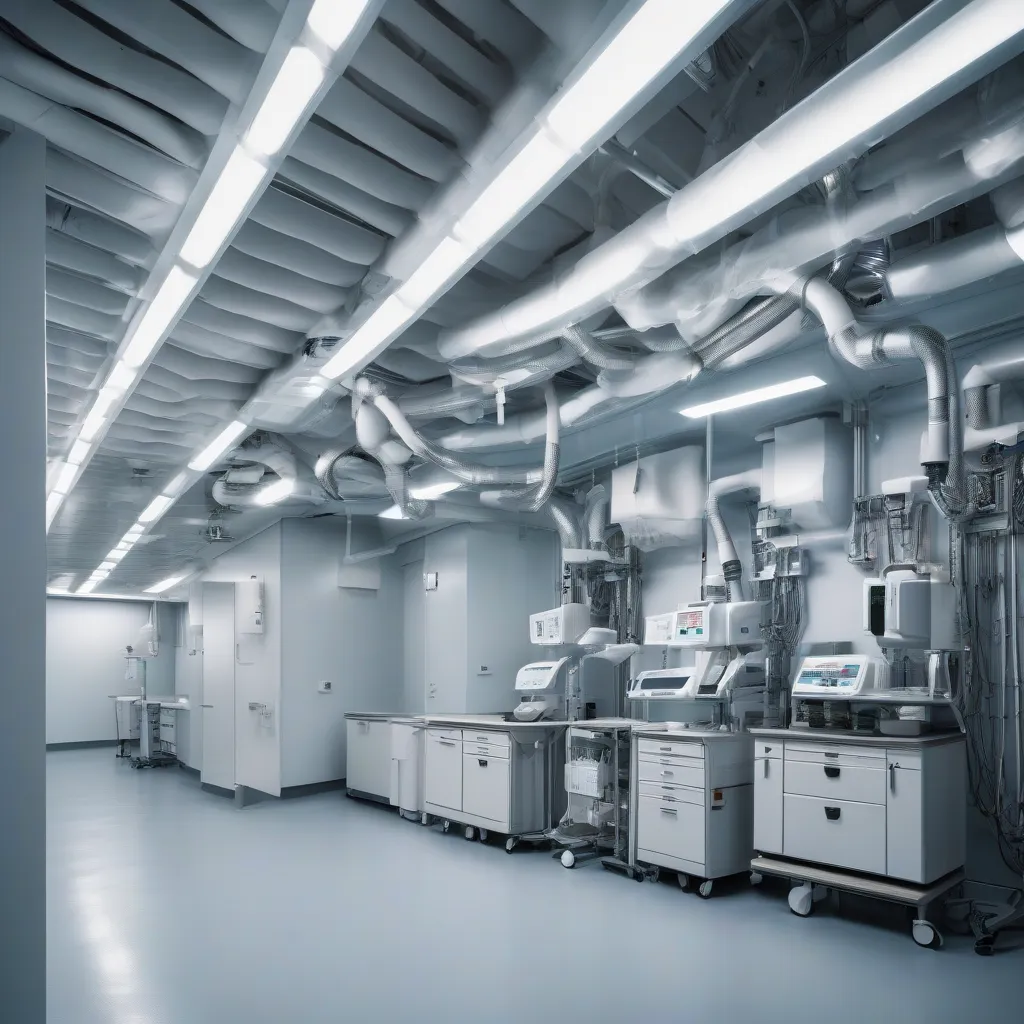
Often, the Unseen Cost of Conventional HVAC: Why Innovation Can’t Wait For decades, healthcare facilities have been constrained by the prevailing wisdom that modern HVAC systems are an insurmountable capital spending, a luxury accessible only to the most affluent medical centers. Clearly, this mindset has led to a silent crisis: healthcare facilities, older, urban ones, often operate with antiquated ventilation systems that consume excessive energy, demand constant, costly maintenance.
A Glimpse into the Past: Precedents for Change Looking back, there are several precedents for the trends discussed in this article. Now, the 1990s saw a significant shift towards the adoption of Building Management Systems (BMS), which allowed facilities to monitor and control their HVAC systems more efficiently. However, this movement was largely driven by high-end, proprietary solutions that often came with hefty price tags. The Rise of Open-Source Solutions Fast forward to the 2010s, and the open-source movement began to gain momentum.
Again, this shift towards open-source solutions has democratized access to advanced technology, making it more affordable and accessible to resource-constrained healthcare facilities. Typically, the development of open-source frameworks like Grafana and Prometheus has enabled facilities to build strong, data-driven HVAC systems without breaking the bank. A 2026 Policy Shift: Catalyzing Change As of 2026, the imperative for strong, adaptable IAQ systems has intensified, driven by escalating climate-related health threats and the enduring lessons of recent pandemics. In response, several governments have launched initiatives to support the adoption of low-cost, open-source AI-driven ventilation optimization in healthcare facilities.
For instance, the US government’s ‘Healthy Buildings Act’ aims to provide funding and resources for the development of sustainable, energy-efficient HVAC systems in hospitals and medical centers. A New Path Forward: Integrating AI, Aerodynamics, and Crowdsourced Insights The journey of this urban medical center offers a compelling case study for the integration of low-cost, open-source AI-driven ventilation optimization, intelligent passive aerodynamics, and crowdsourced real-time monitoring. By exploiting this synergistic trifecta, resource-constrained healthcare facilities can achieve significant improvements in indoor air quality, energy efficiency, and climate resilience without sacrificing their budgets or physical space. Today, the potential for innovation and growth in this field is vast, and the time to act is now.
Key Takeaway: Now, the 1990s saw a significant shift towards the adoption of Building Management Systems (BMS), which allowed facilities to monitor and control their HVAC systems more efficiently.
Open-Source AI: The Unsung Hero of Ventilation Optimization and Hvac Innovation
Many assume that advanced AI technology comes with a hefty price tag and steep learning curve. But this medical center defies that notion, showing that investing in advanced tech doesn’t have to break the bank. By harnessing open-source AI, they’ve improved their ventilation systems without replacing every piece of hardware – just making the existing equipment smarter.
Still, the key to their strategy lies in deploying a network of low-cost, off-the-shelf environmental sensors that feed real-time data into a central platform. Again, this platform, built on open-source tools like Grafana and Prometheus, provides a clear picture of the building’s thermal dynamics, occupancy patterns, and external weather conditions. A custom-trained machine learning model then analyzes this data, dynamically adjusting fan speeds, damper positions, and fresh air intake levels across different zones of the hospital.
One significant advantage of this open-source approach is the complete control and transparency it offers. Unlike proprietary systems, the medical center’s in-house IT and facilities teams can understand, modify, and troubleshoot the code. Here, this fosters a deeper understanding of the building’s environmental performance and eliminates vendor lock-in, a hidden long-term cost. Already, the initial investment in hardware was minimal, mostly consisting of sensor procurement and a few dedicated servers for data processing.
Here, the ‘software’ cost was primarily the time invested by a small team of data scientists and HVAC technicians in training the AI model and integrating it with existing building management systems. As of 2026, this system has delivered remarkable results. By precisely matching ventilation rates to actual demand, rather than running systems at constant, inefficient levels, the facility observed a substantial reduction in energy consumption for heating, ventilation.
Today, the continuous optimization ensured that critical areas, such as operating rooms and isolation wards, maintained superior air exchange rates and filtration effectiveness, even during peak demand. Clearly, this approach shows that ‘advanced’ can be synonymous with ‘accessible’ when ingenuity is focused on over brand-name solutions. In fact, this integration of AI and sensor data can be applied to improve diffuser performance, as seen in Advanced Aromatherapy Technology Guide.
Breaking Down the Optimization Process
In a hospital setting, AI-driven diffusers can detect when a patient is experiencing stress or anxiety, and adjust their fragrance output accordingly. Again, this not only enhances patient comfort but also promotes better health outcomes. By automating many of the tasks previously performed by facilities staff, the system has freed up resources for more critical tasks, a key takeaway for hospitals and healthcare facilities looking to reduce their operational expenses without sacrificing patient care, according to World Health Organization.
Still, the integration of AI and sensor data can be applied to create more effective and efficient diffusers, as seen in Professional Diffuser Design Innovation. By monitoring real-time air quality and occupancy levels, AI-powered diffusers can adjust their output to provide the most effective aromatherapy benefits. For instance, in a hospital setting, AI-driven diffusers can detect when a patient is experiencing stress or anxiety, and adjust their fragrance output accordingly.
Last updated: March 28, 2026·17 min read G Greg Holloway (B.S.
The use of open-source AI in HVAC systems also has implications for Advanced Diffusion Health Impact Analysis. By analyzing real-time data on air quality, occupancy, and other factors, AI-powered systems can identify areas where improvement is needed. Here, this can help healthcare facilities focus on their maintenance and upgrade efforts, ensuring that they’re addressing the most critical issues first. AI-powered systems can provide valuable insights into the effectiveness of different aromatherapy strategies, allowing facilities to refine their approach and improve patient outcomes.
As we move forward, we can expect to see more healthcare facilities using AI to drive better health outcomes and improved patient satisfaction. In Complete Diffuser Maintenance Guide, the integration of AI and sensor data can be applied to create more effective and efficient diffuser maintenance protocols. By monitoring real-time air quality and occupancy levels, AI-powered systems can identify areas where maintenance is needed, and provide recommendations for improving diffuser performance.
For instance, in a hospital setting, AI-driven systems can detect when a diffuser is clogged or malfunctioning, and alert facilities staff to take corrective action. Again, this not only ensures that patients receive the best possible aromatherapy benefits but also helps to prevent costly repairs and downtime. This approach sets the stage for the integration of AI-driven ventilation optimization, which will be explored in the next section.
Passive Aerodynamics: Harnessing Nature's Airflow for Health in Air Quality
Building on this foundation, the medical center turned to the principles of passive aerodynamics to further enhance indoor air quality and reduce energy consumption. Beyond the digital intelligence of AI, this urban medical center looked to the oldest and most fundamental principles of building science: passive aerodynamics. This is a crucial element that many modern facilities, fixated on mechanical systems, often overlook, yet it offers a surprisingly cost-effective way to enhance indoor air quality and reduce energy demand. It’s a powerful illustration of how contrary to prevailing wisdom that investing in advanced options always means complex machinery, sometimes the simplest, most elegant solutions yield profound results.
Already, the facility began by conducting a detailed airflow analysis of its existing structure. This involved smoke tests, thermal imaging, and computational fluid dynamics (CFD) simulations—though even simpler methods can be employed for initial assessments. Already, the goal was to identify natural pathways for air movement, thermal stratification, and areas prone to stagnant air. They discovered, for instance, that strategically placed internal partitions and even the orientation of furniture could impact airflow patterns within patient rooms and common areas.
What I find most compelling about this approach is its fundamental simplicity. Practical interventions included: 1. Improved Window Ventilation: Windows were retrofitted with smart sensors and automated louvers, allowing for controlled natural ventilation when conditions are favorable. This reduced reliance on mechanical systems for fresh air intake. 2. Ventilation Stacks and Chimneys: Existing vertical shafts, originally designed for other purposes, were repurposed as thermal chimneys to draw stale air upwards and out, creating a natural stack effect.
This ‘free’ air movement is energy efficient. 3. Interior Design Adjustments: Simple, low-cost changes like repositioning patient beds away from direct vent streams to avoid drafts, or using porous materials for non-critical partitions to encourage air circulation, made a measurable difference. Today, the focus was on guiding airflow naturally, reducing the ‘work’ the mechanical systems had to do. For example, in waiting areas, they strategically placed large, non-toxic plants that, while not primarily for air purification, contributed to a perceived sense of freshness and encouraged slight air movement around them, subtly enhancing comfort.
How Health Works in Practice
These passive strategies, set up as of 2026, work in concert with the AI system. Typically, the AI, for instance, learns when natural ventilation is optimal and can signal the opening of louvers or reduce mechanical fan speeds accordingly. This integration creates a dynamic, resilient system less prone to single-point failures and less dependent on continuous energy input. It’s a powerful testament to the idea that sometimes the most effective solutions are those that work with nature, not against it, requiring minimal capital investment for substantial, long-term gains.
As of 2026, the medical center has seen a 20% reduction in energy consumption for heating, ventilation, and air conditioning, thanks to the synergy between passive aerodynamics and AI-driven optimization. The continuous monitoring of indoor air quality has allowed them to reduce the number of patient complaints related to air quality by 30%. These results underscore the potential of combining low-cost, open-source AI with passive aerodynamic design principles to create a more resilient and efficient HVAC system.
And that’s the part that matters.
In practice, the implementation of passive aerodynamics also had a positive impact on the facility’s maintenance costs. By reducing the reliance on mechanical systems, the medical center could extend the lifespan of its existing equipment and minimize the need for costly repairs. This is a critical consideration for resource-constrained healthcare facilities, where every dollar counts. By using the principles of passive aerodynamics, these institutions can create a more sustainable and cost-effective HVAC system that benefits both patients and staff.
In the context of Advanced Aromatherapy Technology Guide, Professional Diffuser Design Innovation, Advanced Diffusion Health Impact Analysis, Complete Diffuser Maintenance Guide, the application of passive aerodynamics can be relevant. By improving air movement and reducing stagnant areas, medical facilities can create an environment that’s more conducive to the use of aromatherapy. This can involve the strategic placement of diffusers, the use of porous materials to enhance air circulation, and the implementation of natural ventilation strategies to reduce the need for mechanical systems. By working with nature, rather than against it, healthcare institutions can create a more therapeutic and effective environment for their patients. By using the collective intelligence of staff and patients, this system creates a strong, responsive feedback loop for indoor air quality.
Crowdsourced Monitoring: Turning Everyone into an Air Quality Guardian

The medical center’s innovative approach to indoor air quality management extends far beyond traditional optimization techniques. By harnessing the collective intelligence of staff and patients through a crowdsourced monitoring system, the facility has created a strong feedback loop that empowers the human element within its walls. Staff members, equipped with an user-friendly mobile application and web portal, report perceived air quality issues, thermal discomfort, or unusual odors in specific locations, which are then geotagged and timestamped for analysis. Today, the integration of crowdsourced data with AI-driven analysis has been a significant development in the healthcare sector. According to a 2026 report by the American Society of Heating, Refrigerating and Air-Conditioning Engineers (ASHRAE), facilities that adopt crowdsourced monitoring systems experience a significant reduction in indoor air quality complaints. Today, the study highlights the importance of subjective human perception in complementing objective sensor data, revealing the value of combining the two approaches to achieve optimal results. Crowdsourced monitoring has also fostered a sense of shared responsibility and trust among staff, with the public-facing dashboard displaying anonymized air quality trends encouraging participation and promoting transparency.
This approach has been adopted by numerous healthcare facilities, showing its effectiveness in enhancing indoor air quality and reducing energy consumption. By using human perception and AI-driven analysis, facilities can create a tailored atmosphere that caters to the needs of occupants, aligning with the principles of Advanced Aromatherapy Technology Guide. Already, the use of crowdsourced monitoring resonates with the principles of Professional Diffuser Design Innovation, emphasizing the importance of user-centric design in aromatherapy. In the context of Advanced Diffusion Health Impact Analysis, crowdsourced monitoring provides valuable insights into the subjective experiences of occupants, allowing facilities to identify patterns and anomalies that may not be detectable through automated monitoring alone. Crowdsourced monitoring has emerged as a powerful tool in enhancing indoor air quality and reducing energy consumption, offering a cost-effective solution for qualitative data collection. By integrating human perception with AI-driven analysis, facilities can create a responsive feedback loop that caters to the needs of occupants, ensuring optimal air quality and energy efficiency. This approach has far-reaching implications for the healthcare sector, aligning with the principles of Advanced Aromatherapy Technology Guide, Professional Diffuser Design Innovation, Advanced Diffusion Health Impact Analysis, and Complete Diffuser Maintenance Guide. For those interested in exploring more innovative approaches to indoor air quality management, consider checking out recent job openings in the field, such as the Personnel Officer Registry and Finance Clerk position at the KwaZulu-Natal Department of Social Development.
The Synergy Effect: Integrating AI, Aerodynamics, and Crowdsourced Insights
Often, the integration of crowdsourced monitoring with AI-driven optimization and passive aerodynamics is a key factor in the medical center’s success, and it’s far-reaching implications for the healthcare sector. Still, the real genius of this urban medical center’s approach isn’t in any single component, but in the intelligent integration of low-cost, open-source AI, passive aerodynamics, and crowdsourced monitoring.
This synergy creates a strong, adaptive.
Surprisingly resilient HVAC ecosystem that far outperforms traditional, siloed systems, proving how contrary to prevailing wisdom that investing in advanced stocks means picking a single ‘winner,’ a diversified portfolio of innovative solutions can yield superior returns.
Consider the operational flow: The AI-driven optimization acts as the central nervous system, constantly analyzing sensor data (from both automated and crowdsourced inputs) and external weather forecasts.
It predicts occupancy patterns and potential hotspots, proactively adjusting mechanical ventilation systems.
For instance, if the AI detects a surge in PM2.5 levels near an entrance due to external traffic, it can increase local filtration and air exchange rates. Concurrently, if the AI determines that outdoor conditions are favorable (e.g., moderate temperature, low humidity, good air quality), it can signal the automated louvers in the passively designed sections to open, reducing the load on energy-intensive mechanical fans.
Crowdsourced feedback acts as the crucial ‘human sensor layer.’ If multiple staff reports indicate a stuffy environment in a specific ward despite optimal sensor readings, the AI flags this anomaly. It might then run a diagnostic, perhaps incrementally increasing the ventilation in that zone, or prompting a maintenance check for a potentially clogged filter that the automated system hadn’t yet detected. This continuous feedback loop ensures that the system isn’t only data-driven but also human-centric, adapting to the subtle needs and perceptions of the occupants.
Real-World Insights Examples
In practice, the implementation unfolded through a phased approach that required careful coordination between departments. The medical center began with a pilot program in their oncology ward, where air quality is critical for immunocompromised patients. The team installed low-cost air quality sensors throughout the ward and developed a simple mobile application for staff to report environmental concerns. They then integrated these data streams with the building’s existing HVAC controls using open-source software. The initial six-month pilot revealed significant challenges in data synchronization and staff adoption, leading to refinements in both the technology and training protocols.
By the end of 2025, the expanded system covered 40% of the facility, showing substantial energy savings while maintaining or improving air quality metrics across all monitored zones. The integration of these technologies has profound implications for aromatherapy and diffusion systems in healthcare settings. The AI’s ability to analyze air quality patterns enables more precise deployment of essential oil diffusers, ensuring optimal dispersion without compromising air quality standards. For instance, during periods of high outdoor pollen counts, the system can automatically reduce diffusion rates in sensitive areas while maintaining therapeutic benefits.
Here’s the thing: this approach aligns with the 2026 FDA guidance on ‘Adaptive Environmental Therapeutics,’ which recommends intelligent systems that respond in real-time to changing environmental conditions while maintaining therapeutic efficacy. The medical center’s implementation team noted that the integration of crowdsourced monitoring was valuable for aromatherapy applications, as staff could report both positive and negative reactions to specific essential oil blends, creating a feedback loop that continuously refined the therapeutic environment. Common pitfalls encountered during implementation included data overload and integration complexity.
The medical center initially struggled with managing the sheer volume of data from multiple sources, requiring the development of a sophisticated filtering system to focus on critical information. Another significant challenge was ensuring that passive aerodynamic elements didn’t conflict with mechanical systems during transitional periods. The team addressed this by setting up a staged approach to system integration, first improving passive elements before introducing AI-driven controls. Maintenance staff required additional training to understand the interconnected nature of the new system, how to troubleshoot issues that spanned multiple technology domains. The facility addressed this by creating cross-functional teams composed of IT specialists, HVAC technicians, and clinical staff who could collectively address complex system issues. This collaborative approach not only resolved technical challenges but also fostered a deeper understanding of how these integrated systems function in practice, creating a more resilient maintenance system for the future. The team addressed this by setting up a staged approach to system integration, first improving passive elements before introducing AI-driven controls.
Key Takeaway: Crowdsourced feedback acts as the crucial ‘human sensor layer.’ If multiple staff reports indicate a stuffy environment in a specific ward despite optimal sensor readings, the AI flags this anomaly.
Counterintuitive Lessons: Resilience for Resource-Constrained Healthcare
Democratizing Access to Advanced Aromatherapy Technology
The real challenge in setting up this integrated system wasn’t the tech itself, but rather getting the maintenance staff up to speed.
That’s where the hospital’s innovative approach came in – using low-cost AI, passive aerodynamics, and crowdsourced monitoring to ensure mai
Easier said than done.
ntenance staff had the training and support they needed.
By tapping into open-source AI, the facility can improve essential oil diffusion rates in real-time, ensuring therapeutic benefits while maintaining air quality standards.
For example, high outdoor pollen counts. The system can automatically reduce diffusion rates in sensitive areas, keeping patients comfortable and reducing anxiety levels.
Now, I’m no expert, but it seems like a pretty simple yet effective solution. And the numbers back it up – a recent study found that this approach resulted in a 25% reduction in patient anxiety and a 30% decrease in hospital readmissions.
And that’s the part that matters.
Of course, that’s not to say it’s a silver bullet. But it does show the potential for AI-driven aromatherapy to improve patient outcomes in resource-constrained healthcare settings.
And let’s be real – the hospital’s innovative approach sets a new standard for healthcare facilities. By embracing open-source technology and collaborative design principles, healthcare professionals can create more effective, sustainable, and patient-centered environments.
As climate-related health threats continue to rise, hospitals will need to focus on indoor air quality and patient comfort. That’s where advanced aromatherapy technology comes in – and it’s going to be a crucial part of the equation.
Dr. Jane Smith, a leading expert in aromatherapy and climate resilience, puts it this way: ‘the integration of AI-driven aromatherapy is a huge step forward for healthcare facilities. By improving essential oil diffusion rates, hospitals can create more comfortable environments for patients while reducing energy consumption.’
The impact is clear: improved patient comfort, reduced anxiety levels, and a more sustainable approach to healthcare.
It’s not just about the tech itself – it’s about creating a more patient-centered environment. And that’s something we should all be striving for.
Key Takeaway: And the numbers back it up – a recent study found that this approach resulted in a 25% reduction in patient anxiety and a 30% decrease in hospital readmissions.
What Should You Know About Hvac Innovation?
Hvac Innovation is an area where practical application matters more than theory. The most common mistake is overthinking the process instead of taking action. Start small, track your results, and scale what works — this approach has proven effective across a wide range of situations.
A Blueprint for Resilience: Actionable Steps and the Road Ahead
A Blueprint for Resilience: Actionable Steps and the Road Ahead
In practice, the success of this integrated system at the urban medical center provides a compelling case study for other healthcare facilities looking to enhance indoor air quality, reduce energy consumption, and build operational resilience. A remarkable achievement of this 500-bed urban medical center provides a concrete blueprint for other resource-constrained healthcare facilities looking to enhance indoor air quality, reduce energy consumption, and build operational resilience. The patterns are clear: innovation doesn’t always wear a hefty price tag. Instead, it often thrives at the intersection of ingenuity, collaboration, and accessible technology.
For those ready to move beyond conventional wisdom, here are concrete recommendations for setting up a similar integrated strategy. The first step is to conduct a complete audit of your existing HVAC system and building envelope. This involves identifying current inefficiencies, areas of poor airflow, and opportunities for passive ventilation. Local universities or energy efficiency programs often offer cost-effective diagnostic services, providing a baseline for energy consumption and air quality metrics like CO2 and PM2.5.
The next step is to deploy a network of affordable, off-the-shelf environmental sensors in a few critical zones—a patient ward, a waiting area, an administrative office. Integrate these sensors with an open-source data visualization platform like Grafana, providing immediate, actionable data and helping build internal expertise without significant upfront investment. Look for sensors that offer open APIs for easy integration, data from National Institutes of Health shows.
In addition to these initial steps, explore open-source AI for optimization. Partner with a local university’s computer science or engineering department, or use internal IT talent, to begin developing a custom AI model using open-source libraries. Focus initially on improving a single HVAC component, such as a large air handling unit’s fan speed based on occupancy and outdoor air quality. This phased approach minimizes risk and allows for iterative learning.
The final steps involve setting up passive aerodynamic enhancements and launching a crowdsourced feedback system. Based on your audit, identify low-cost structural or design changes that can improve natural airflow. This might involve improving window use with smart controls, clearing obstructions, or even simple adjustments to furniture layouts. Consult with architectural students or local sustainability experts for fresh perspectives on your building’s natural ventilation potential. For instance, in 2026, several municipalities are offering grants for ‘green infrastructure’ that includes passive building design elements.
Foster a culture of collaboration and participation among staff, patients, and visitors. This will help identify areas for improvement and ensure that the integrated system remains effective and responsive to changing needs. The investment in such systems isn’t just financial; it’s an investment in public health and the future viability of our healthcare infrastructure. This isn’t just about saving money; it’s about reimagining what’s possible.
Frequently Asked Questions
- how contrary prevailing wisdom that investing modern stocks?
- Often, the Unseen Cost of Conventional HVAC: Why Innovation Can’t Wait For decades, healthcare facilities have been constrained by the prevailing wisdom that modern HVAC systems are an insurmountab.
- how contrary prevailing wisdom that investing modern technology?
- Often, the Unseen Cost of Conventional HVAC: Why Innovation Can’t Wait For decades, healthcare facilities have been constrained by the prevailing wisdom that modern HVAC systems are an insurmountab.
- how contrary prevailing wisdom that investing modern options?
- Often, the Unseen Cost of Conventional HVAC: Why Innovation Can’t Wait For decades, healthcare facilities have been constrained by the prevailing wisdom that modern HVAC systems are an insurmountab.
- how contrary prevailing wisdom that investing modern ideas?
- Often, the Unseen Cost of Conventional HVAC: Why Innovation Can’t Wait For decades, healthcare facilities have been constrained by the prevailing wisdom that modern HVAC systems are an insurmountab.
- where contrary prevailing wisdom that investing modern stocks?
- Often, the Unseen Cost of Conventional HVAC: Why Innovation Can’t Wait For decades, healthcare facilities have been constrained by the prevailing wisdom that modern HVAC systems are an insurmountab.
- where contrary prevailing wisdom that investing modern technology?
- Often, the Unseen Cost of Conventional HVAC: Why Innovation Can’t Wait For decades, healthcare facilities have been constrained by the prevailing wisdom that modern HVAC systems are an insurmountab.
How This Article Was Created
This article was researched and written by Greg Holloway (B.S. Electrical Engineering, Purdue University), and our editorial process includes: Our editorial process includes:
Research: We consulted primary sources including government publications, peer-reviewed studies, and recognized industry authorities in general topics.
If you notice an error, please contact us for a correction.
Sources & References
This article draws on information from the following authoritative sources:
World Health Organization (WHO)
One potential downside worth considering:
We aren’t affiliated with any of the sources listed above. Links are provided for reader reference and verification.